Recently, Beijing Veequick Photonics Technology Co., Ltd. (hereinafter referred to as "Veequick Photonics"), a portfolio company of JC CAPITAL's Angel investment, achieved a technological breakthrough. The company, in collaboration with partners, has developed a mass-producible femtosecond laser specifically for three-photon imaging. The system has been successfully delivered to and accepted by a client, marking a breakthrough in breaking the monopoly of foreign brands in this sector.
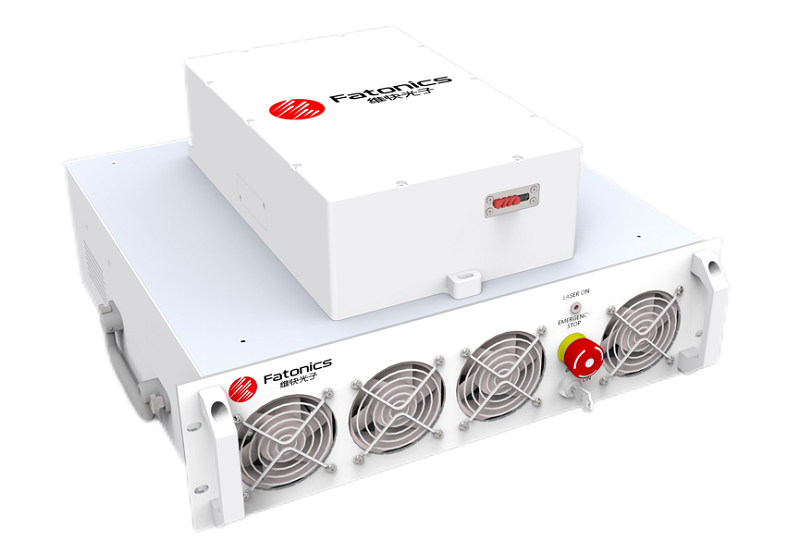
This wavelength-tunable femtosecond light source for three-photon imaging is based on high-power femtosecond fiber laser technology. By utilizing optical parametric amplification, it achieves tunable repetition rate, high-energy femtosecond fiber laser output in the 1300-1700nm range. This technology is particularly suitable for non-invasive deep-tissue imaging of living organisms, holding significant importance for research into dynamic cellular processes and functions within deep tissue structures in fields such as biology and neuroscience.

Traditional optical microscopy is limited by the diffraction limit of light and has a restricted ability for deep-tissue imaging. With the advancement of laser technology and in-depth research into nonlinear optics, multiphoton microscopy techniques have emerged accordingly.
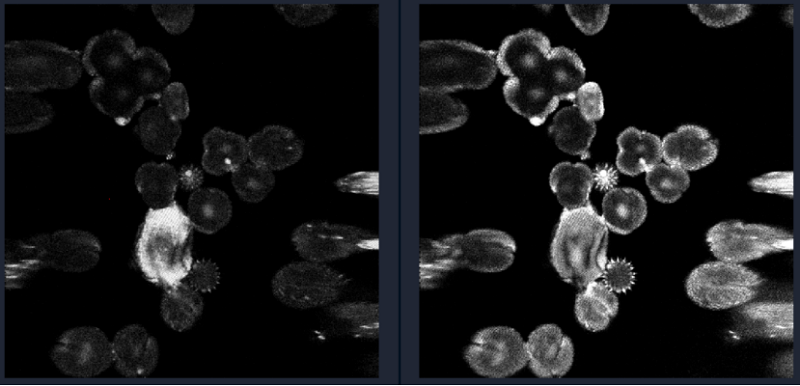
As a branch of multiphoton technology, three-photon imaging typically employs ultrashort pulse (femtosecond level) infrared lasers as its light source. Due to the strong penetrating power of infrared light, which allows it to reach deep tissue without significant scattering or absorption by surface layers, three-photon imaging achieves substantially greater imaging depths compared to traditional single-photon or two-photon microscopy.
Professor Cheng Heping's team from Peking University previously published an article in Nature Methods , demonstrating the use of a miniaturized three-photon microscope weighing only 2.17 grams. This achievement enabled, for the first time, functional imaging of the entire cortex and hippocampal neurons in the brains of freely behaving mice, opening new paradigms for investigating neural mechanisms within deep brain structures.
Veequick Photonics is a high-tech enterprise focused on the research, development, production, and sales of ultrafast lasers and specialty optical fibers. Its founding team, composed of PhDs with experience in renowned research institutions in the UK, Germany, and the US, is dedicated to providing global customers with ultrafast lasers, specialty fiber products, and professional application solutions. The company's technology underpins the realization of Nature Methods' "Method of the Year" – In vivo non-neuronal physiology . Veequick possesses full-spectrum capabilities in the design, fabrication, and testing of micro-structured hollow-core fibers. It has also internationally achieved, for the first time, a high-power, high-repetition-rate nonlinear optical parametric amplification system.
Having accumulated nearly a decade of experience in the research, development, and mass production of products for the biomedical imaging field, Veequick Photonics holds core proprietary ultrafast laser technologies, including space-grade stable mode-locking and multi-band frequency conversion. It can provide customers with full-spectrum, high-stability, and wide-power laser products. The company has successfully established the most comprehensive series of femtosecond lasers for bioimaging applications in China, including:
l 780nm Femtosecond Laser
l 930nm Femtosecond Laser
l 1030nm Femtosecond Laser
l 1100nm Femtosecond Laser
l 1560nm Femtosecond Laser
l 1300-1700nm Femtosecond Laser
l 1700-2100nm Femtosecond Laser
l Dual-wavelength tunable fiber laser for CARS
With the continuous advancement of two-photon and three-photon imaging technologies, Veequick Photonics adheres to its mission of "Focusing on Ultrafast Lasers, Illuminating the Microscopic World." The femtosecond lasers it provides aim to offer domestically produced, high-quality light sources for research in fields such as neuroscience, oncology, cell biology, and pharmacology, thereby facilitating new breakthroughs in the life sciences.